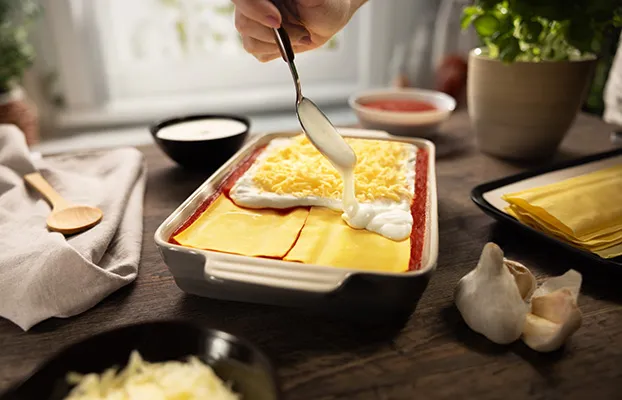
Lasagna is one of those timeless comfort dishes that show up for potlucks and cozy family dinners . However, lasagna’s magic doesn’t just lie in the ingredients, but also in how you layer them. The texture of the pasta and the distribution of the sauce can make the difference between a soggy failure and a slice that holds its shape beautifully. If you nail a reliable layering method, you’ll get delicious results, even while you’re juggling other tasks in the kitchen. When it comes to how to layer lasagna, the secret often comes down to keeping moisture balanced, ensuring the lasagna cooks with even heat, and giving the dish a little patience as it rests after baking.
Why Layering Lasagna Matters
Flavor and Texture Impact
Layering isn’t just stacking pasta sheets in a pan; you need to build up the layers in the correct order to give it a consistent texture. The pasta sheets soak up the sauce on the bottom and around the edges, while the cheese and fillings soften the middle layers. A well-layered lasagna is less likely to be dry in the middle or overly saucy at the edges because the moisture from the sauce is spread evenly throughout each layer. You can think of the sauce and cheese as the glue that keeps the pasta sheets and fillings together. Layering also influences how you cut and serve, saving you from common serving headaches, especially when time is tight during a party or weeknight rush.
Practical Serving and Slicing
How you prepare a classic or a nachos lasagna it affects serving as much as the bake itself. A properly layered lasagna tends to slice cleanly, yielding generous, even portions. Resting the dish for about 15 to 20 minutes after baking helps the layers set, making slicing easier and reducing tearing.
The Essential Ingredients for Lasagna
A solid lasagna begins with the basics: a robust tomato sauce, quality pasta sheets, and a creamy cheese mixture that binds the layers together. Balance is key, as you want to put the layers together so the lasagna won’t collapse under its own weight or release too much liquid as you bake. You’ll often find that small tweaks to ratios affect texture, and of course there’s always room for personal preference in the flavors of the sauce—like whether you’re doing meat, vegetarian or chipotle salsa style—and your choice of cheese.
| Layer | Typical Ingredients | Optional Additions |
| Sauce Base | Tomato sauce with herbs, garlic, onions; sometimes a hint of red wine | Roasted peppers, mushrooms, olives; a splash of cream for a creamier finish |
| Pasta Sheets | Wide lasagna sheets (oven-ready or pre-boiled, suitable for a 9x13 inch baking dish) | Par-cooked sheets for stability, or no-boil sheets for convenience |
| Cheese Layer | Creamy ricotta (often beaten with egg), mozzarella for melt, parmesan for bite | Spinach or herbs mixed into ricotta; béchamel for extra creaminess |
| Filling | Ground beef, sausage, or sautéed vegetables; cooked until tender | Mushrooms, spinach, zucchini, or lentils for a lighter option |
Sauce and Pasta Foundation
A good foundation for lasagna begins with a sauce that has the right consistency: too thin, and it can leave the lasagna watery; too thick, it becomes too solid; and too much sauce can crowd your lasagna, while too little will dry out your pasta. Then, you’ll also want to consider flavor, as simmering the sauce longer deepens the taste. When it comes to pasta, you’ll want the right kind of pasta sheets, with minimal overlap. A touch of olive oil can help prevent sticking. When using no-boil sheets, a little extra moisture from the sauce helps them soften evenly. Lasagna sheets absorb moisture at different rates depending on thickness, so you may want to tweak the sauce consistency. When it comes to how to layer lasagna, you’ll want the bottom layer to be stable, as this anchors the rest of the lasagna.
Cheese and Creaminess
The cheese layer both binds and boosts flavor. Ricotta mixed with egg provides structure, while mozzarella melts into a creamy sheet that helps hold the dish together. Parmesan adds a salty lift that brightens the whole profile. When you balance the cheeses you use along with the quantities, you’ll avoid a dry, pasta-heavy bite with too little binding and an overly heavy surface. But you can also play with other creamy ingredients, like a bechamel sauce if you’re looking for something richer and silkier. If you plan to assemble ahead, consider chilling the cheese layer briefly to make it easier to spread, then bring the dish back to room temperature before baking.
Step-by-Step: How to Layer Lasagna Perfectly
One of the ways to ensure a well-structured lasagna is to follow a clear order. Here’s how to prepare your lasagna:
Preparing Your Dish
- Prepare a 9x13-inch baking dish and lightly oil or butter the bottom and sides to prevent sticking.
- Preheat your oven to 375°F so it’s ready when assembly finishes.
- Line the dish with a thin layer of sauce to prevent the first noodle from sticking.
- Lightly drain any excess moisture from fillings to avoid a watery bake.
- Have your sauce, pasta, cheese, and fillings within easy reach to streamline the process.
Plan for about 1 cup of sauce per layer and roughly 1 cup of cheese mixture per layer, adjusting to taste.
The Classic Order for Lasagna
How do I layer lasagna correctly? You can think of the layering process as a sequence:
- Start with Sauce. A thin base of sauce on the bottom prevents sticking and distributes flavor. This layer helps the dish stay cohesive as it bakes, so you’ll want to keep it even, but not pooled.
- Add First Layer of Pasta Sheets. Ensure you avoid excessive overlap as you cover the base with sheets, letting them lie flat. This layer supports the structure and makes slicing easier later. If you’re using no-boil sheets, they’ll soften as they absorb sauce during baking.
- Spread on the Cheese Mixture. Usually, you’d use ricotta with egg or bechamel, apply this layer with a spatula to distribute it evenly, avoiding pockets that can cause uneven texture. The egg helps bind, and the ricotta adds a creamy texture.
- Add Meat or Veggie Filling. Distribute the filling evenly in dollops and smooth into a uniform layer so every bite includes a bit of everything. Don’t overload one area, or you’ll end up with a dense center and thin edges.
- Repeat Layers. Build in the same order until the dish is nearly full. Aim for 3 to 5 layers, depending on your pan and appetite, adjusting as needed for height and cook evenness.
- Finish with Sauce and Cheese. It’s important to finish with the cheese layer, as a final saucy top protects the interior from drying and a generous cheese topping seals the surface with melt and color. Spread it to ensure even browning.
After you’ve completed the final layer, let the dish rest briefly before baking. Resting helps moisture and temperature settle, reducing cracking and improving slicing cleanly. Fifteen to twenty minutes is typical, though a shorter rest still offers benefits if you’re pressed for time.
How Many Layers Should a Lasagna Have?
Traditionally, lasagnas run between 3 and 5 layers, with regional preferences and pan size shaping the exact count. You can opt for a leaner, quicker version for weeknights or a thicker stack for special occasions. You’ll want to balance the number of layers with the pan depth so your lasagna cooks evenly. Some kitchens favor perfectly even layers, others embrace a rustic, varied look. Use a practical rule of thumb: keep the total height proportional to your pan so the dish bakes uniformly.
Common Mistakes to Avoid When Preparing Your Lasagna
Even with the basics down, a few missteps can derail the result. You might see pooling sauce, dry or crumbly pasta, uneven cheese distribution, or overly heavy layers that leave the center underdone. By spotting these pitfalls, you’ll save time and reduce waste:
- Using too much sauce creates a soupy bottom and a soggy crust, so make sure you measure and spread the sauce evenly.
- Skipping the resting period or cutting too soon can cause the layers to slide apart.
- Overcrowding cheese or fillings, leading to dense, heavy bites.
- Using pasta sheets that are too thick or undercooked can result in a chewy texture. To avoid this, par-cook your pasta or choose no-boil sheets.
Pro Tips for the Perfect Lasagna Layering
Here are practical tips for how to prepare your lasagna to refine your italian cooking game:
- Par-cook pasta vs. oven-ready: Par-cooking gives you more control over texture, particularly if your sauce isn’t as liquid as you’d hoped. If you’re short on time, no-boil sheets work too, but you may need to adjust the sauce thickness.
- Add béchamel for creaminess: A light béchamel layer can dramatically improve creaminess and make slicing easier.
- Resting time after baking: A 15 to 20-minute rest helps the slices set and makes serving easier.
Frequently Asked Questions about Lasagna Preparation
- How do you layer lasagna step by step?
Begin with a sauce base, followed by a sheet of pasta, a spread of cheese mixture, filling, and then repeat the sequence. Finish with sauce and cheese, then rest briefly after baking to help the layers set and slices stay neat.
- Do you start with pasta or sauce when layering lasagna?
Begin with a thin layer of sauce on the bottom to prevent sticking, followed by pasta sheets, then cheese and fillings.
- How many layers should lasagna have?
Most traditional lasagnas have 3 to 5 layers.
- Do you finish lasagna with sauce or cheese?
Finishing with both sauce and cheese protects the top from drying out and yields a golden, bubbly finish. A light cheese top can also form a pleasant crust if given a moment under the broiler at the end.
- Is resting important for lasagna?
Yes. Resting for 15 to 20 minutes after removing it from the oven helps the layers settle and makes slicing neater. If you’re transporting it, a longer rest at room temperature can help with handling.
Final Thoughts on Layering Lasagna
Ultimately, when it comes to lasagna, proper layering matters when it comes to flavor and structure. Taking a moment to plan the order and moisture distribution can make a noticeable difference, especially when feeding a crowd. It’s not just about following a recipe; it’s about building a reliable technique you can rely on again and again. While this guide focuses on lasagna, the same care for layering and balance can inspire other dishes too, including a well-curated entertaining menu. After all, thoughtful planning tends to make gatherings smoother—and that’s a win for any host.


