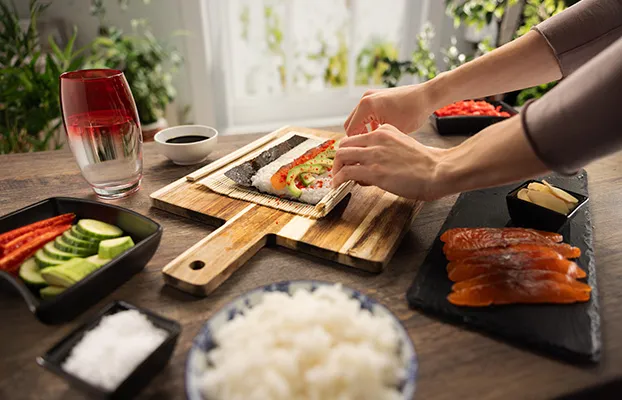
For most of us, Japanese food is synonymous with sushi—cute bite-sized sticky rice rolls filled with fish, sometimes meat or vegetables, and wrapped in seaweed. While many of us may know it as a dish served on conveyor belts in trendy restaurants, sushi has been served on festive occasions in Japan since the Edo period. In fact, sushi isn’t an everyday meal in Japan, but one reserved for special occasions and traditional celebrations like weddings or New Year’s.
Internationally, sushi is consumed more casually, and recipes have evolved to cater to international tastes, with non-traditional Japanese ingredients being added, like avocado. Some of the most popular sushi rolls, such as the California Roll , originated outside of Japan. That’s the beauty of sushi: it offers centuries of Japanese tradition while also offering room for modern spins and creative twists. So, if you’re wondering how to make the perfect sushi, you’ve come to the right place.
What Makes Sushi So Special?
Sushi is one of the most celebrated expressions of Japanese food culture, blending centuries of tradition with modern creativity. Its origins can be traced back to ancient methods of preserving fish through fermentation with rice, which evolved into the refined art of sushi known in Japan today. At its heart, sushi and rice are inseparable, as rice is not just a base, but rather it’s the foundation for flavor, texture, and balance. It’s carefully washed, seasoned with vinegar, and then handled with precision.
Balance is central to the culinary philosophy of sushi in Japan. Whether it’s fish, vegetables, or seaweed layered over rice, sushi must always highlight the best, freshest ingredients along with creating contrast, whether that be salt and acidity, or sweetness and umami, in a single, curated bite. Balance is a cultural value in Japan, and sushi also demonstrates a love for seasonality, mindfulness, and ritual in preparation, and the joy of sharing food with family and community.
When sushi began to travel beyond Japan, it invited reinterpretation from creative chefs, but its principles remain central and universal. From a simple roll to delicate nigiri, Japan’s sushi is rooted in quality ingredients and a careful attention to detail. Even the home cook feels that sushi blends an ancient art with personal expression, where each roll combines tradition with individuality.
Sushi Ingredients for Perfect Sushi
The Role of Rice in Sushi
As rice is the foundation of sushi, it’s essential to get the sushi rice recipe right. Sushi rice is short- to medium-grain, sticky but not gluey, with tender yet distinct grains.
Making sushi rice properly is vital for good sushi. For example, if you rush the rinse or skip cooling, grains may cling or break. Temperature also matters for rice to make sushi, as slightly warm rice blends with toppings, while cooler rice holds shape for neat rolls.
| How to Make SushiRice | ||
|---|---|---|
| Ingredient | Amount | Notes |
| Japanese short-grain sushi rice | 2 cups | Rinse until water runs clear. |
| Water | 2 ½ cups | Use a heavy pot or rice cooker. |
| Rice vinegar | 3 tablespoons | For seasoning the rice. |
| Sugar | 1 tablespoon | Round, not sharp flavor. |
| Salt | 1 teaspoon | Balance with tanginess. |
Method: Rinse the sushi rice till the water runs clear, then cook in water. While it cooks, whisk the rice vinegar, sugar, and salt until dissolved. When the rice finishes, fold in the seasoning while it’s warm, using a gentle cutting motion to avoid smashing the grains. Let the sushi rice cool down to a warm-to-room temperature before using it to roll or shape.
Nori, Fillings & Toppings
Nori, the seaweed sheets used to wrap some sushi, isn’t just a wrapper as it also contributes aroma and texture. To highlight seaweed notes, try nori sushi pairings with simple fillings. You might combine the rice and seaweed with raw fish, cooked proteins, vegetables, and even eggs for tamagoyaki in your sushi rolls. Go for components that complement the rice rather than overpower it.
- Raw fish options: tuna, salmon, yellowtail, or other sashimi-grade choices
- Cooked proteins: crab, shrimp, smoked salmon, or eel (unagi)
- Vegetables: cucumber, avocado, bell pepper, carrot, daikon
- Egg: tamagoyaki (Japanese omelet)
- Seasonings and accents: sesame seeds, pickled ginger, wasabi, soy sauce
Start modestly, as overfilling can cause sushi rolls to break. A simple mix of rice with a sliver of fish or veg is enough. As you experiment, you’ll learn which fillings pair best with the rice and the nori.
Step-by-Step Guide: Making the Perfect Sushi at Home
How to Roll Classic Sushi Rolls (Maki)
- Gather your sushi rice, nori sheets, fillings, and a bamboo mat. You want the rice at a comfortable temperature where it’s neither hot nor ice cold, so the grains stick without turning mushy.
- Place a sheet of nori on the mat, shiny side down, and spread a thin, even layer of rice across about two thirds of the sheet, leaving a margin at one edge to seal the roll at the end.
- Lay the fillings in a tight line along the center. You might choose cucumber for crunch, tuna for savoriness, and a sliver of avocado for creaminess for your sushi recipe.
- Lift the edge of the mat closest to you and begin to roll, applying steady pressure to keep things tight.
- Rotate the mat slightly as you roll to maintain shape and even thickness. If you see gaps, don’t panic, just adjust and re-roll as needed.
- Once rolled, lightly dampen the edge of the nori to seal.
- Use a clean knife to make clean cuts, wiping the blade between slices to keep pieces neat.
- Slice the roll into even six to eight pieces and arrange them on a plate with space between pieces.
- Garnish your sushi rolls with sesame seeds or thin scallion strips for a fresh finish. For a splash of color, add thin cucumber ribbons or a dab of wasabi on the side.
If you’re sharing, offer soy sauce and pickled ginger on the side as optional accompaniments with your sushi rolls.
How to Make Sushi Handrolls (Temaki)
Temaki, also known as the sushi hand-roll, is the hand-rolled cousin of the maki. It’s less formal, more forgiving, and great for casual meals, as the method for this sushi dish recipe centers on shaping a cone with a half sheet of nori and stacking rice and toppings inside. The trick is to keep the cone loose enough to bite through, yet sturdy enough to hold together as you eat.
- Start with a crisp, dry nori sheet and a small amount of slightly cooled sushi rice.
- Pinch a little rice between your fingers and press it into a rough triangle near the edge of the nori.
- Add a line of fillings along the inner edge, then roll the nori around to form a cone. If it feels unstable, a dab of water at the edge can help seal. Don’t overfill, as Temaki should be approachable and easy to eat with your hands.
For a quick, tasty Temaki, try cucumber, avocado, a thin slice of salmon or tuna, and a touch of mayonnaise or citrus. Set them on a platter narrow-end down, so they resemble little cones. Sushi hand-rolls are great for entertaining or cooking with family, and it’s also a good space to experiment with flavor pairings, like yuzu, a splash of sesame oil, or furikake as a finishing touch.
Tips for Making Sushi Like a Pro
Common Mistakes to Avoid
- Rice texture too sticky or too hard. Rinse well, rest briefly, then season properly to keep sushi rice cohesive before any sushi recipe.
- Rolling too loosely or overfilling. Both can cause disassembly or bulky bites.
- Temperature issues. Rice that’s too warm or too cool affects stickiness and bite.
- Poor knife skills. A dull blade mashes fillings; a too-sharp blade can tear nori or rice.
- Moisture balance. Too-wet rice sticks; too-dry rice crumbles. Don’t overwork the grains.
- Overloading fillings. Start simple when making sushi rolls and add one element at a time for balanced bites.
Quick Tricks for Neat Presentation and Fresh Taste
- Use a sharp knife, wipe the blade between cuts, and slice with a steady, single motion. A clean cut reveals neat lines and stable fillings.
- A light drizzle of soy sauce or a dab of wasabi on the side heightens the aroma without overpowering the main flavors.
- Fresh ingredients make a noticeable difference; if possible, source sashimi-grade fish or crisp vegetables.
- Small touches, like garnishing, can help add up to a restaurant-like presentation of sushi rolls at home . Keep each element vibrant and well-balanced. You’ll see your plating improve as you experiment with arrangement, color contrasts, and bite sizes. Not every attempt will hit the mark, but every try teaches you something, and that’s progress.
Sushi in Japanese Culture
Sushi in Japan is more than a meal, it’s a cultural experience that’s shaped by etiquette, respect, and tradition. At its core, sushi etiquette emphasizes an appreciation for ingredients, the chef, and fellow diners. Hands may be used for nigiri, but chopsticks are used for rolls. Small portions, taking time to savor flavors in a sequence, and if applicable, following the chef’s recommendations all highlight the balance that defines sushi and Japanese food. As we’ve mentioned before, rice is central to sushi: its texture, seasoning, and temperature all set a solid foundation for layering fresh fish and vegetables on top.
Sushi is also a social experience and is traditionally served in Japan for special occasions. Its preparation has a ritualistic element, and it’s served in a family or community setting that encourages connection. Of course, the diversity within Japan also shapes its flavors, as regional styles can influence the dish, with some areas preferring lighter vinegar, while others go for stronger seasoning, but in generally, the guiding principle for sushi is seasonality and quality. At its heart, sushi is about sharing and savoring the moment and enjoying fresh flavors that harmonize.
Frequently Asked Questions
- What is the best sushi rice to make sushi?
The best for a sushi rice recipe is typically a Japanese short- to medium-grain variety that becomes slightly sticky when cooked. Choose a reputable sushi rice brand and adjust based on gloss, stickiness, and bite.
- Can I make sushi without raw fish?
Absolutely. Vegetarian and cooked variations of sushi dish recipes offer plenty of flavor and texture. Try cucumber, avocado, pickled vegetables, tamagoyaki, and cooked seafood to create satisfying rolls.
- What’s the difference between sushi rolls and sushi handrolls?
Sushi rolls, or maki, are layered inside a sheet of nori, rolled with rice and fillings, and sliced into bite-sized pieces. Sushi handrolls, or Temaki, are cone-shaped and eaten by hand.
- How do I make sushi rice at home?
Making sushi rice is easy: Rinse the rice until the water runs clear, cook with about 2 ½cups of water per 2 cups of rice, then fold in rice vinegar, sugar, and salt. Fan or stir to cool to warm-to-room temperature before using it for sushi.
- Is sushi healthy?
Sushi can be a healthy choice when you emphasize lean proteins, vegetables, and sensible portions. It offers a balance of carbohydrates from rice, protein from fish or tofu, and micronutrients from fillings and seaweed.
Conclusion
Trying sushi and Japanese food at home is a rewarding task, as you get to know its Japanese roots, play around with your own creativity, and enjoy a burst of fresh flavor. With careful attention to sushi rice quality, mindful rolling, and thoughtful fillings, you can craft sushi that is both delicious and visually appealing. The process matters as much as the plate, and practice tends to improve results over time. So, gather up your ingredients, set up your workspace, and start exploring the world of perfect sushi.


